

Do you know what one of the biggest predictors of weight loss failures is?
Unrealistic expectations.
It’s not ‘sugar addiction’ or ‘a lack of motivation’ or ‘ill-discipline,’ but simply people setting out with the wrong estimations and perceptions of what a weight loss journey actually looks like.
From how much weight you can lose in a week, to how long it will take to reach your overall goal – and how easy you’ll find the whole process – people fail to start any physical transformation with the right calculations and rationality, straight from the outset.
They become blindsided by the true and frequent happenings of any fat loss endeavour and wonder why they’re not seeing the results they were promised.
Failure looms.
The better you can get at unpacking these kinds of falsehoods from the beginning, however, the better you’ll be at navigating the perils of the dieting process.
Adherence, motivation, and feelings of success will all increase.
You’ll be able to persevere when faced with obstacles.
No longer will you want to take a sledgehammer to the scales every Monday morning – nor start dieting just three weeks before your friend’s wedding when you realise three weeks isn’t actually a very long time.
You’ll begin to craft a mindset that will take on board what to expect – where, perhaps, you’ve ignored and failed to surmount such challenging hurdles before.
Here’s what to truly expect when you embark on a new weight loss journey:
‘What Got You Here, Won’t Get You There’
If a physical transformation is what you’re after, then you need to come to the realisation that you must change parts of your life.
‘What got you here, won’t get you there,’ after all.
You can’t keep repeating the same behaviours, the same eating patterns, the same amount of exercise, and the same ways of thinking, hoping to get different results.
Some level of adjustment to your life is a prerequisite for any level of fat loss success.
Unfortunately – and people seldom realise this – behaviour change is hard. Very hard.
Were I to ask you to interlace your fingers, for example, (go on, do it), one thumb naturally lands on top of the other.

That familiar position represents your ingrained sense of identity and your natural way of acting — ‘this is me, and these are the things I do’.
If I ask you to clasp your hands the opposite way, however, with the other thumb on top, it would immediately feel awkward or unbearable.
This is exactly what changing a behaviour feels like: wrong.
And when something feels wrong, people often shirk away from the challenge of making it ‘right’.
That uncomfortable feeling is how our brains resist new behaviours: just as changing your hand clasp feels unnatural, adopting actions outside your established identity can feel intolerable or even ‘not you’.
This discomfort isn’t a sign of failure, but rather evidence of the brain’s feedback loop that ties habits to self-image, which, alongside your actions, must be gently shifted for lasting change.
Of course, you don’t have to completely overhaul every part of your life (and this is another reason why people fail), but if you’re doing the same things you were doing 3, 6, or 12 months ago, then your body has no reason to change.
Consistently ask yourself: ‘Am I doing something different to before?’
-> Are you eating less?
-> Are you eating differently?
-> Are you better at engaging in the appropriate eating skills?
-> Have you developed a different relationship with food?
-> Have you improved your emotional regulation?
When you accept that things must change – as hard as that may be – you’ll be set to finally see the physical and mental transformation you’re seeking.
‘I Need To Lose Two Pounds A Week!’
How many times have you heard that you should always aim to lose two pounds of bodyweight a week?
Or, in some magazine articles, ‘ten pounds in just ten minutes’? Or, that some people should be a certain size or bodyweight?
Hearing these auspicious claims over and over again tends to lead to a mental block.
One study showed that patients entering a diet and exercise programme expected to lose an astounding – and simply speculative – 20-40 per cent of their starting bodyweight; figures that can only be realistically achieved through bariatric surgery [1].
Are you falling down the rabbit hole of chasing too much weight loss for what’s humanly possible?
When individuals don’t lose ‘two pounds a week,’ or they fail to achieve their desired goal in the specific and oft-random timeframe they’ve set, they view themselves – and their endeavours – as failures.
You can’t speed up results nor fully predict how your journey will pan out. This is why obsessing over numbers and figures is unhelpful for most people.
Focus should be directed, instead, towards other measures of growth:
-> Are you getting stronger?
-> Do you notice improvements with energy and stress levels?
-> Are you sleeping better?
-> Are you consuming more fruit, vegetables, and water?
-> Do you have a better relationship with food and your body?
Correlating effort with solely weight loss progress gives the impression you can ‘work the fat off’, which isn’t strictly true.
As Amir Siddiqui, owner of Dubai’s ‘Symmetry Gym’, states, “Results don’t happen at the rate your mind desires, they happen at the rate your body allows.”
Just because you’ve witnessed a particular rate of weight loss, or learnt of impressive and speedy results prompted by a specific dieting protocol, it doesn’t mean you should use those as a baseline for your own pursuits.
Always think of the bigger picture and what trends are showing over time.
It’s far better to lose a smaller amount of weight and keep it off than lose a large amount but pile it back on again after just a few months.
It’s Never About The Meal Plan
While, of course, the types and quantity of food you consume matter when it comes to fat loss, people fail to realise it’s about so much more than this.
Baking your high-protein granola breakfast bars, missing out on the post-dinner deluge of biscuits, and finding the perfect creatine brand will only get you so far.
It’s about the tedious, hidden, and challenging eating skills, psychological strategies, and foundational eating tactics that will set you up for long-term success.
If you’re still struggling with your cravings, or falling for the ‘all-or-nothing’ trap, or simply can’t get a handle on your social events, then no number of meal plans, diet rules, or 8-week detox blasts will help you manage these hurdles in the long run.
When people start to shift away from common surface-level weight loss solutions and undertake a journey that involves self-development, iteration, and relentless education, they start to see long-lasting results.
-> Are you willing to work on identifying and mastering your emotions?
-> Will you put in the dedication required to work on monotonous mindful eating strategies?
-> Can you work through the feeling that eating skills are worthless while still practicing them?
-> Can you shift away from ‘weight loss’ as your marker of success and, instead, realise it’s about behaviours and habits?
If you set out on your journey expecting it to be just that, a journey, full of ups and downs, meandering paths, and moments of despair, then you’ll be just fine when you have to work on the things that indirectly elicit fat loss.
Remarkably, when you shift your fixation away from the ‘meal plan,’ your body changes anyway.
Similarly, if you become fixated with an outcome-based mindset, you become reactive and punish yourself to engage in unhealthy and unsustainable behaviours to force change.
And when numbers ‘increase’ or fluctuate (because they inevitably do), you assume you’re failing.
You have nothing else to lean on or use as a reference point for improvement, and so stop what you’ve been doing – or, simply put, self-sabotage.
Focus on every aside from fat loss and you’ll start to see fat loss.
Practice Is Everything
Magazines, supplement companies, and social media influencers will always peddle ‘the easiest route’.
Why market hardship and struggle when you can sell – and make money from – seemingly effortless, quick-fix solutions?
While promises of ‘losing ten kilograms while sitting on the sofa eating what you want all day’ can appeal to the desperate dieter, along with guarantees of ‘becoming four inches slimmer in a week’, they’re only inflating the unrealistic expectations surrounding fat loss.
Losing weight will be a struggle. There will be times of despondency, dejection, and demotivation. There’ll be hunger, tiredness, and monotony. It won’t be the easy road you’ve been sold.
Ultimately, you need to be prepared to practice.
You’ll need to practice skills, new habits, novel behaviours, and actions you haven’t tried before. You’ll need to be prepared to fail, to feel like giving up, but still persevere.
Unfortunately, people find themselves at that familiar crossroads: ‘This is much harder than I thought; do I turn left and stop this arduous challenge, or do I turn right and keep going?’
When people fail to realise that sustainable fat loss comes from diligent practice, repetition, and experience of new skills, they never get past the initial bump in the road of exasperation and fleeting motivation.
It’s also why hiring an online weight loss coach could be the answer you’re looking for.
Ultimately, the premise of practice is that growth is a system, not a singular event.
Improvement isn’t about single breakthroughs, but about compounding small gains over long stretches of time.
This is why people hate practicing: the effects of consistent practice are invisible at first and exponential later.
It’s why mindfulness, emotional eating, and eating skills seem pointless; they don’t seem to be doing anything.
And, unfortunately, individuals chasing fat loss never get to ‘later’.
When you realise that you’ll need to actually improve over time, rather than blindly following rules or hoping things will change with the wave of your whey protein scoop, you’ll start to take steps forward.
Practice is the slow, often uncomfortable work of turning what you know into who you are — hard precisely because it demands patience long after that initial motivation fades.
There Is No Pause Button
If you’ve decided to wait until Monday to start, you’ve already failed.
If you’re just working up towards your holiday, you’ve already failed.
If you’re counting down the days for this journey to be over, you’ve already failed.
Unfortunately, people fail to realise that fitting holidays, weekends, social arrangements, and celebrations into their journey – and learning how to always eat in alignment with long-term physical aspirations – is an indispensable part of the process.
You can’t press ‘pause’ on things when you like, especially with the regularity that people engage in eating ‘out of the norm,’ simply because everything counts.
Your body and its response to an energy deficit doesn’t care whether it’s your partner’s birthday, or that you’ve been looking forward to this trip for a whole year, or your sister is getting married; it only cares about what you’re putting in it.
Individuals become stuck in a ‘one step forward, one step back’ cycle, simply because they ignore their principles every few days or weeks in a bid to ‘make the most’ of an event.
It’s crucial to comprehend that it’s never an either/or situation.
You don’t have to devour everything in sight, just as you don’t have to completely deprive yourself.

You must learn how to regulate your overall consumption, decide when it’s appropriate to make sacrifices, learn how to tune into hunger and fullness cues, and appreciate that you can still eat out and align your eating patterns with your health and fitness goals.
Of course, this takes courage and bravery. An ability to slow down your decision-making, learn how to respect boundaries, and potentially leave food, even if you have a strong desire to consume it.
This takes practice, of course.
But when you can realise that there’s no turning the dial completely ‘off’ – only ‘up’ or ‘down’ depending on the situation – you start to adhere to things forever, not just for a few weeks.
Failure Is Inevitable
Expecting your journey to run smoothly is short-sighted. Unless you live a charmed life, it’s a recipe for failure.
Pre-empting such roadblocks – and installing diversions to overcome them – will curb any unrealistic expectations from the outset.
When those hurdles arrive – the unexpected stressful moments, the injuries, the illnesses, the spending forty-five minutes having to clean the dog’s poo off the kitchen floor instead of making dinner – you won’t be surprised; you’ll be prepared.
The famous truism, Murphy’s Law, states that ‘Anything that can go wrong will go wrong.’
Whilst acknowledging such a hard line may seem undesirable, predicting the worst is encouraged when dieting.
Fragments of pessimism, propagated at the start, will allow you to set pragmatic timeframes and deal with future challenges – setting a ‘premortem’ on your goals, as such.
While confidence is imperative, you’ll know how to react when things go awry and can ensure uncritical optimism is grounded in reality.
No longer will you feel like a failure when you lose motivation or deviate from your plan; you’ll appreciate that it’s meant to happen, whilst being more inclined to keep pursuing your weight loss goals.
Triumphant dieters are the ones who can turn up every day and execute the right actions, regardless of how motivated or inspired they are. Despite feelings of boredom or apathy, they still manage to get the job done.
They no longer seek excitement in a new diet or exercise programme, but focus on putting the reps in each day.
Skipping days because you’re ‘not in the mood’ will never work.
Choosing an unhealthy meal because you’re ‘tired’ won’t inspire progress.
Snacking in the evenings because you’ve had a ‘hard day at work’ won’t take you closer to your goals.
You’ll never be always motivated, nor inspired, to exercise and eat well; you will, however, need to always take repetitive steps forward to achieve what you set out to.
You’ll Never Be Happy
People tend to want fat loss to be twice what it is.
If they lose a pound; they’ll want to have lost two. Should they drop two inches from their waist, they’ll want that to be four. Dropping one dress size isn’t enough; they want another.
One study showed that obese women seeking weight loss treatment characterised a 25 per cent weight loss as, “One I would not be happy with”, and a 17 per cent weight loss, as, “One that I could not view as successful in any way” [2].
Following forty-eight weeks of treatment and a 16-kilogram weight loss in the same intervention, a shocking 47 per cent of participants didn’t even achieve a weight they could regard as ‘disappointing’.
Even when patients are repeatedly informed that their weight loss goals are unrealistic, they still expect to lose twice as much as has been advised [3].
People who become disillusioned with their results – no matter how realistic they are – tend to engage in self-critical statements, set unattainable behavioural goals, and, eventually, abandon their dieting efforts.
People are constantly pounding away on that hedonic treadmill; the never-ending hamster wheel of euphoria that dictates they’ll always circle back to an equilibrium of happiness, whatever they achieve.
With this thinking, however, even when you reach a certain goal, size, or shape, the chances are you still won’t be happy. So, stop trying to be.
Expectations will always rise with results, meaning that you’ll inevitably want more.
Instead of losing weight to increase joy, use it to better yourself – to push yourself forward.
We know that, although losing a specific amount of weight may seem like the logical goal, the desire to lose more will never cease.
True happiness surfaces, instead, from engaging with the process.
While you may never be pleased with the look of your current physique, you should always strive to be happy with self-development.
In freeing yourself from the ‘seeking,’ you focus on the ‘doing’ – you detach from the reward and focus on the work. In doing so, you stay true to your honest wants and desires.
Being content with making progress towards the overarching goal is often the marker of a truly successful person, as opposed to whether or not they can slip into a smaller shirt size.
Do You Need Help?
Wouldn’t it be great to follow a method of eating that encourages you to consume the foods you want to eat while learning the pertinent skills and strategies to manage your overall consumption?
Wouldn’t it be great to attend a social event without that crippling anxiety over what you’re going to eat or whether you need to ‘save’ calories?
Wouldn’t it be better for your mental health to look forward to your dinner without the fear that you’re missing out on foods you truly enjoy?
Wouldn’t life be happier if you were to consume enjoyable, satiating, and pleasurable repasts without fearing your next item?
Wouldn’t it be great to ditch that ‘all or nothing’ mentality and actually stick to something for longer than a few weeks?
Wouldn’t it be great to shed that unwanted body fat and keep it off?
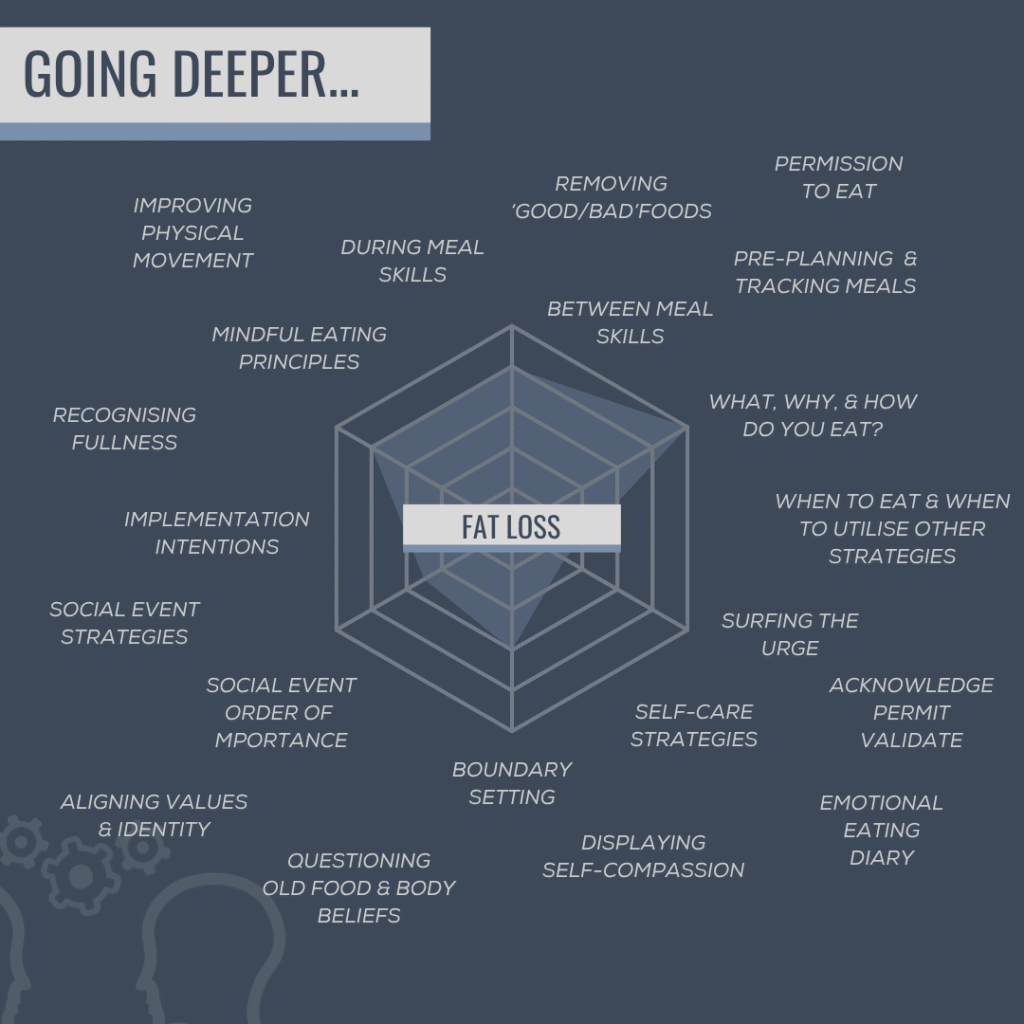
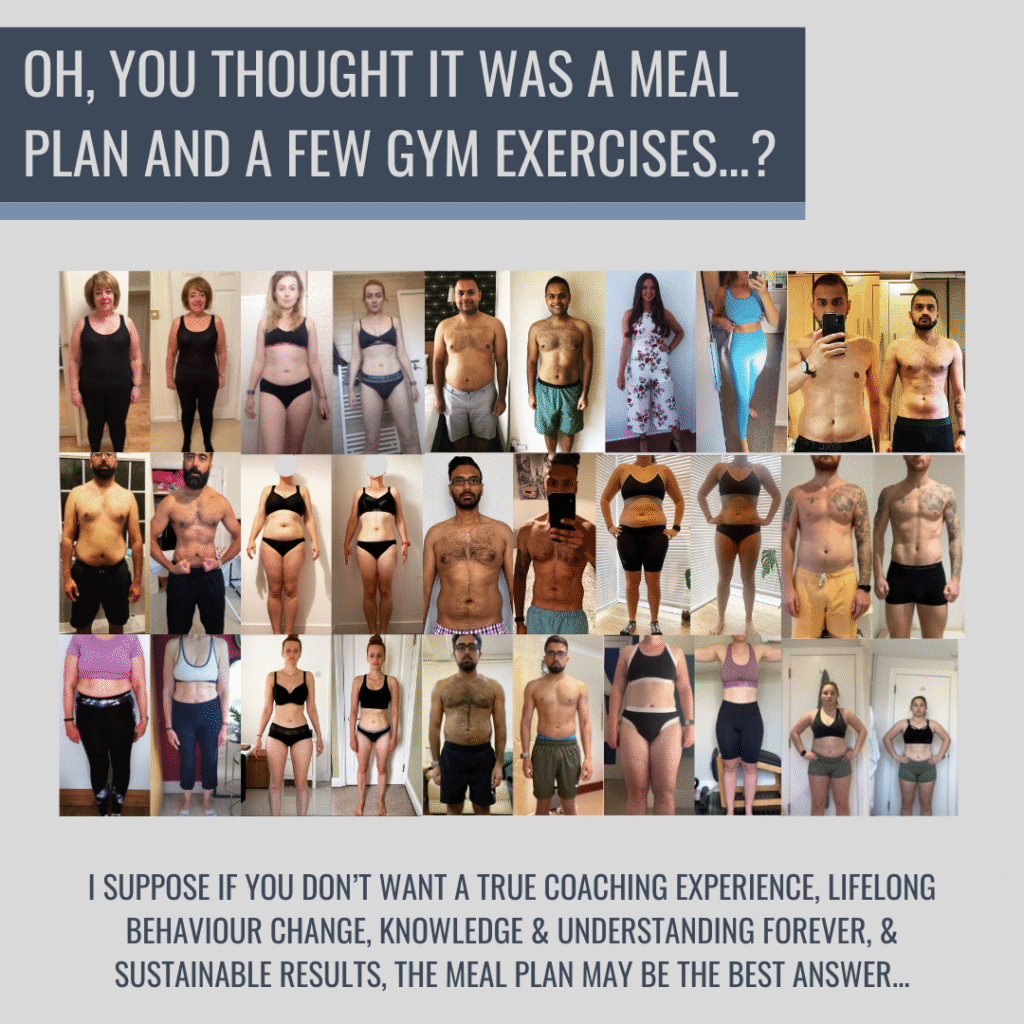
If you’re finding yourself answering ‘yes’ to all of these questions, now is the perfect time to learn how to incorporate your favourite foods into a healthy and sustainable diet, all while dropping inches and shedding unwanted body fat.
Now is your time to start a weight loss journey the right way.
The Quick-Fire Weight Loss Expectations FAQs
1. What Is The Biggest Reason People Fail To Lose Weight?
One of the biggest predictors of weight loss failure is unrealistic expectations. Many people start their journey with incorrect ideas about how much weight they can lose, how long it will take, and how easy it will be.
This disconnect between expectation and reality leads to frustration, loss of motivation, and self-sabotage. The most successful dieters are those who begin with accurate, grounded expectations and measure success through consistency, not speed.
2. Why Does Behaviour Change Feel So Uncomfortable?
Behaviour change is inherently uncomfortable because it disrupts your sense of normality. Just as clasping your hands the ‘wrong’ way feels odd, changing your eating habits or exercise routine feels unnatural at first.
This discomfort isn’t a sign that you’re doing something wrong — it’s proof that your brain is adapting to a new identity. The more you practice these new behaviours, the more natural they become, eventually turning into automatic habits that support long-term fat loss.
3. How Much Weight Can You Realistically Lose In A Week?
The idea that everyone should lose two pounds a week is a myth. The rate of fat loss depends on your starting point, calorie deficit, activity level, and biological differences. Studies show that most people dramatically overestimate what’s achievable — some even expect to lose 20–40% of their body weight, which is only possible through surgery.
A more realistic approach is to focus on sustainable progress: improving your energy, strength, sleep, and relationship with food and body rather than chasing arbitrary numbers.
4. What Mindset Helps With Long-Term Weight Loss Success?
Successful dieters understand there’s no pause button. They learn to navigate holidays, weekends, and stressful days while maintaining balance. They expect setbacks and see them as part of the process, not as failure.
They practice patience, self-awareness, and the discipline to keep showing up even when motivation fades.
5. Will Losing Weight Make Me Happy?
Weight loss can improve confidence and health, but it won’t guarantee happiness. Research shows that many people who lose significant amounts of weight still feel unsatisfied, immediately setting new goals once they reach their target.
Lasting happiness comes from engaging with the process — developing discipline, resilience, and self-understanding — not from achieving a specific number on the scale. True success is found in progress, not perfection.
References
1. Foster, G. D., Wadden, T. A., Vogt, R. A., & Brewer, G. (1997). What is a reasonable weight loss? Patients’ expectations and evaluations of obesity treatment outcomes. Journal of Consulting and Clinical Psychology, 65(1), 79–85.
2. Foster, G. D., Wadden, T. A., Vogt, R. A., & Brewer, G. (1997). What is a reasonable weight loss? Patients’ expectations and evaluations of obesity treatment outcomes. Journal of Consulting and Clinical Psychology, 65(1), 79–85.
3. Wadden, T. A., Womble, L. G., Sarwer, D. B., Berkowitz, R. I., Clark, V. L., & Foster, G. D. (2003). Great Expectations: “I’m Losing 25% of My Weight No Matter What You Say”. Journal of Consulting and Clinical Psychology, 71(6), 1084–1089
Need some help? Download my free How To Win At Fat Loss Guide!

By submitting your email you agree to receive my regular funny, witty, and enlightening emails and marketing offers via email.
How To Win At Fat Loss

Download my FREE eBook on How To Win At Fat Loss and you’ll learn…
- Why everyone usually fails when it comes to trying to shed body fat
- Why you should be lifting weights
- Why calories are so important
- Why weighing yourself is a no-no
- Why mastering nutritional habits are the key to success
All so you can…
- Finally stop failing and start winning at fat loss
- Finally shed inches, drop dress sizes, and actually see a change for once
- Finally transform your body and mind so you’re not constantly battling those dieting demons
- Finally figure out how to lose the fat, keep it off, and flaunt the figure you’ve always dreamt of displaying